

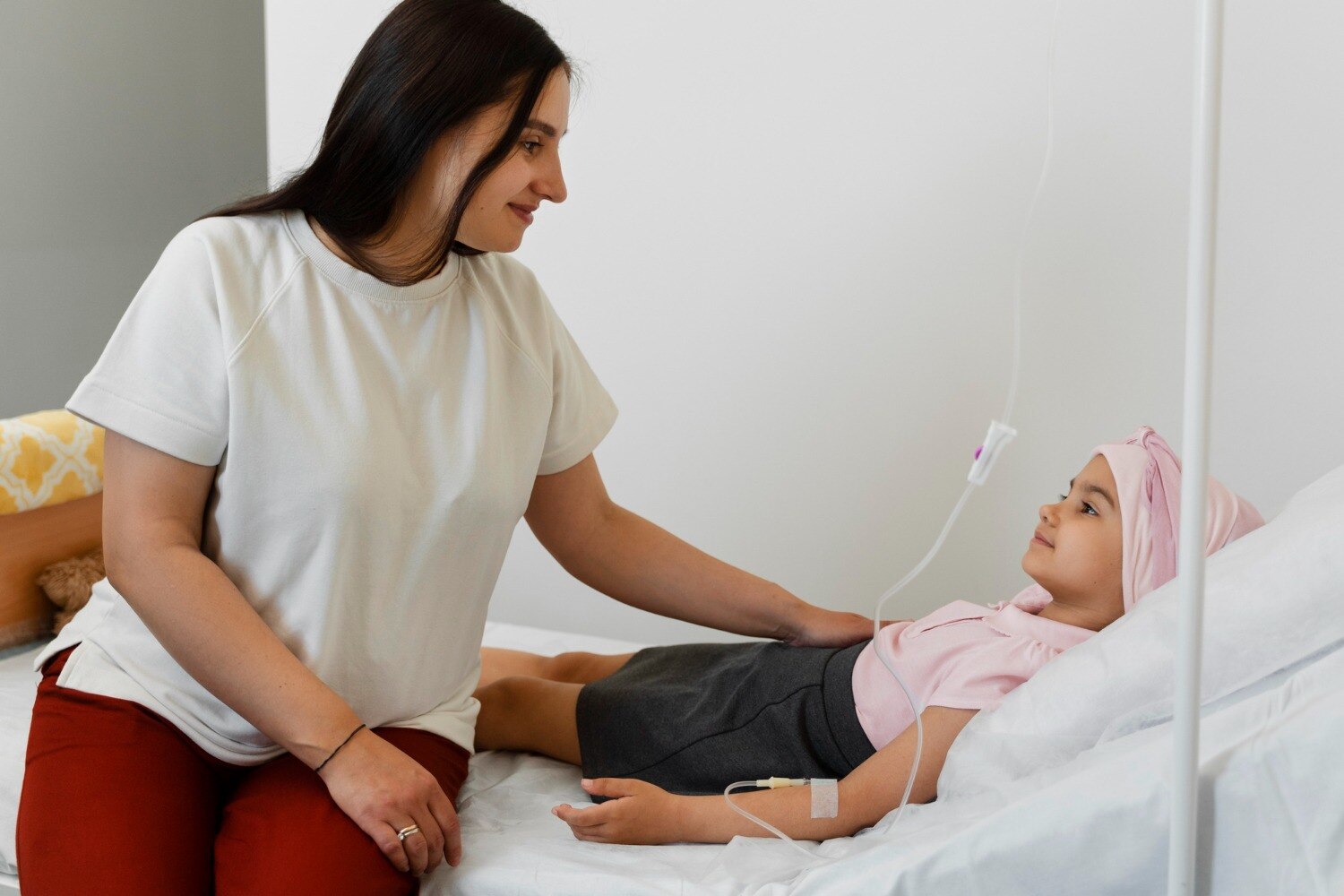
A chemotherapy daycare visit is planned cancer treatment delivered in an ambulatory oncology unit, where you are assessed, treated and discharged without an overnight hospital bed. By understanding the visit sequence, treatment times, admission criteria and service differences, you can prepare properly and compare outpatient options more intelligently.
Key takeaways
- Daycare chemotherapy ends the same day, without an overnight hospital bed.
- Ask who supervises treatment and what emergency support is available onsite.
- Confirm drug, dose, premedications, infusion time and observation period before treatment.
- Seek urgent advice for fever, breathing difficulty, uncontrolled vomiting or severe weakness.
What a Chemotherapy Daycare Unit in Pune Looks Like
You arrive at a chemotherapy daycare unit in Pune for planned treatment and return home after administration and observation, without occupying a hospital bed overnight. The unit usually has reclining treatment chairs, a nursing station, emergency equipment, and access to an oncologist.
- Check in for your scheduled appointment and report new symptoms, fever, medicine changes, or previous reactions.
- Meet the oncology team for a clinical review. Staff check your blood counts, kidney function, liver function, weight, and other tests required by the protocol.
- The team confirms your identity, diagnosis, medicines, dose, treatment plan, and consent before starting.
- A nurse inserts a cannula or accesses your implanted port, then gives fluids or premedication when prescribed.
- You receive the chemotherapy, injection, targeted medicine, or supportive treatment while staff monitor your vital signs and watch for nausea, allergy-like reactions, pain, or breathing difficulty.
- After the drug finishes, you remain for the observation period set by your regimen. Staff then remove the cannula or secure the port and give written instructions.
That is what is chemotherapy daycare in Pune in practical terms: planned ambulatory care, not an emergency department or inpatient admission. Treatment can last from a short visit to most of the day when it includes blood tests, prehydration, several medicines, slow infusion, or extended observation.
You go home only when the team considers you stable and gives you a contact route for problems after discharge.
Daycare, Outpatient and Inpatient Chemotherapy: What Changes
Daycare chemotherapy treatment in Pune is a same-day form of outpatient care: you receive planned treatment in an ambulatory unit and return home after monitoring. “Daycare” does not guarantee a short visit; prehydration, several medicines, slow infusions, or observation can keep you there most of the day.
| Setting | What happens | Suitable when |
|---|---|---|
| Daycare | Scheduled intravenous, injected, hydration, supportive or selected blood-product treatment, followed by discharge | You are stable, tests are acceptable, and the protocol does not require overnight monitoring |
| Outpatient chemotherapy in Pune | Treatment outside admission, including a daycare visit, portable pump, or selected multi-day schedule | You can travel safely, manage medicines and instructions at home, and reach urgent care quickly |
| Inpatient chemotherapy | Admission to a hospital bed for continuous observation, intensive treatment, or complication management | The regimen or your condition requires overnight care, frequent monitoring, or immediate intervention |
The setting depends on more than the drug name. Your oncology team reviews:
- Blood counts, kidney function and liver function
- Previous infusion reactions, allergies and other medical conditions
- The dose, infusion speed, hydration needs and observation period
- Home support, travel distance, traffic and access to urgent medical help
A high-dose regimen, severe infection, uncontrolled vomiting, serious reaction, or unstable condition can change a planned daycare visit into admission. Ask whether the Pune unit provides laboratory testing, port or cannula care, transfusions, hydration and after-hours advice on site; services differ beyond the chair or infusion price.
What Is Included in Chemotherapy Administration and How Long It Takes
A chemotherapy daycare in Pune can deliver more than a short intravenous drip. Ask whether the unit provides:
- Short or prolonged chemotherapy infusions
- Injections given under observation
- Hydration and electrolyte replacement
- Blood tests and vascular-access care
- Blood transfusions or treatments for predictable infusion reactions
Before chemotherapy administration in Pune begins, the team checks:
- Your identity, diagnosis and prescribed protocol
- The drug, dose, route and scheduled timing
- Allergies, current medicines and previous reactions
- Blood counts, kidney function, liver function and other regimen-specific results
- Consent and dose calculations based on body-surface area, weight or organ function
- Cannula or port access and its condition
Premedication may reduce nausea or an allergy-like reaction, but it does not remove the risk. Nurses monitor you during administration, while the unit keeps emergency medicines, equipment and a hospital-escalation pathway available. Hazardous drugs also require trained staff, protective equipment, written spill procedures and controlled disposal.
Plan to stay for several hours, not just the infusion time. Blood tests, oncology review, preparation, premedication, line access, administration and observation all add time; a short injection may take less time, while a prolonged infusion, transfusion or reaction can occupy most of the day.
Confirm the expected duration, discharge medicines, port instructions and after-hours contact before you leave.
How to Prepare for the Visit and What to Watch for Afterwards
Bring your medication list, allergy details, recent reports, treatment schedule, identification, insurance documents, phone charger and a light snack. Wear loose clothing that allows access to a port or cannula.
Arrange transport home and a responsible adult if premedication could cause drowsiness, weakness or nausea. Do not drive until you know how treatment affects you. Keep your route short enough to reach the treating unit or emergency department quickly; Pune traffic matters if symptoms begin after discharge.
Before outpatient chemotherapy in Pune, ask:
- Which medicines will I receive, and how long will I remain under observation?
- Which take-home medicines should I use, at what dose and at what time?
- What temperature requires an immediate call?
- Whom do I contact overnight, on weekends and during public holidays?
- How should I care for my port or cannula site, and how much fluid should I drink?
- Can this daycare chemotherapy treatment in Pune provide blood tests, hydration or urgent review if I feel unwell?
Contact the oncology team immediately for any of these symptoms. Do not wait for the next appointment.
| Symptom | What to do |
|---|---|
| Temperature of 38°C (100.4°F) or higher | Call the emergency number immediately; do not take fever medicine first unless instructed |
| Breathing difficulty, chest pain, facial swelling or widespread rash | Seek emergency care immediately |
| Confusion, fainting, severe weakness or uncontrolled shaking chills | Call urgently and do not travel alone |
| Repeated vomiting, inability to drink, very little urine or severe diarrhoea | Contact the unit promptly |
| Uncontrolled bleeding, black stools or new severe abdominal pain | Seek urgent medical assessment |
| Increasing redness, swelling, pain or pus at the port or cannula site | Contact the treatment team the same day |
How to Compare Chemotherapy Daycare Services in Pune
Compare onsite capability, clinical oversight, emergency access, and travel demands—not the chair fee alone. What is chemotherapy daycare in Pune varies between units: one may provide only scheduled infusions, while another also handles blood tests, port care, hydration, transfusions, and treatment reactions.
| Service feature | Question to ask | Why it matters |
|---|---|---|
| On-site testing | Are complete blood counts, kidney tests, and liver tests available before treatment? | Delays or outside laboratory visits can disrupt chemotherapy administration in Pune. |
| Oncologist review | Who reviews your symptoms, medicines, test results, and dose before each cycle? | A nurse-only infusion model may not suit a regimen needing frequent clinical decisions. |
| Vascular access | Do trained staff manage cannulas, ports, and difficult access? | Poor access causes failed attempts, delays, and line complications. |
| Support treatments | Are hydration, anti-nausea medicines, transfusions, or electrolyte correction available? | You may otherwise need a second facility for problems linked to treatment. |
| Reaction response | What happens if you develop breathing difficulty, fever, low blood pressure, or an infusion reaction? | Ask about monitoring, emergency medicines, ambulance transfer, and after-hours contact. |
| Time and travel | What is the full visit duration, and how quickly can you reach help from home? | Outpatient chemotherapy in Pune avoids admission but leaves transport and post-discharge planning with you. |
Whether you consult Dr. Pratik Patil - Best Oncologist in Pune or another oncologist, request a written estimate covering drugs, tests, consumables, observation, and supportive care. Choose a unit that matches your protocol and home support, not simply the lowest quoted price.
Related service
Daycare (chemotherapy administration) Daycare (chemotherapy administration) What is chemotherapy daycare? Chemotherapy is normally given in an outpatient setting known as a chemotherapy daycare. View service → |
Frequently asked questions
What is chemotherapy daycare in Pune?
It is a planned chemotherapy service where you receive administration and observation in a treatment chair, then return home the same day.
How does daycare chemotherapy differ from inpatient treatment?
Daycare treatment avoids an overnight bed, while inpatient chemotherapy involves hospital admission for prolonged treatment, closer monitoring or management of complications.
How long does chemotherapy administration take?
The visit includes registration, assessment, premedications, drug administration and post-treatment observation; the total time depends on the prescribed medicines and infusion schedule.
What should you check when comparing chemotherapy daycare services in Pune?
Check oncologist access, trained chemotherapy nurses, emergency equipment, infection-control practices, medicine verification, observation arrangements and clear aftercare instructions.