
The hours and weeks after a targeted-therapy dose depend on the drug, the cancer being treated and whether treatment continues at home or in a clinic. You will know what to record, which symptoms need same-day advice or emergency care, how follow-up tests guide the next dose, and what to include in a recovery plan.
Key takeaways
- Complete the clinic’s observation period before leaving after intravenous treatment.
- Follow the prescribed schedule for oral medicines and record missed doses.
- Seek urgent help for breathing trouble, facial swelling, severe rash, or confusion.
- Bring symptom notes, medication lists, and scan reports to follow-up visits.
What happens after a targeted-therapy dose?
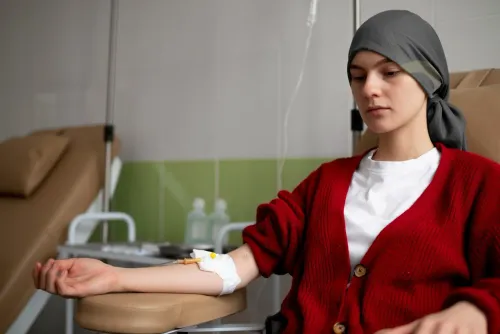
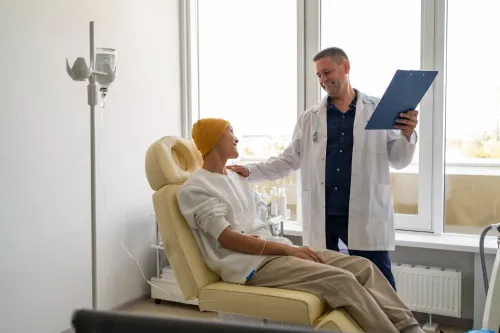
1. After an intravenous targeted-therapy dose or injection, stay in the clinic for the observation period set by the oncology team. Staff check for an infusion or allergic reaction before you leave; go home only after they confirm you are stable and discharge is complete.
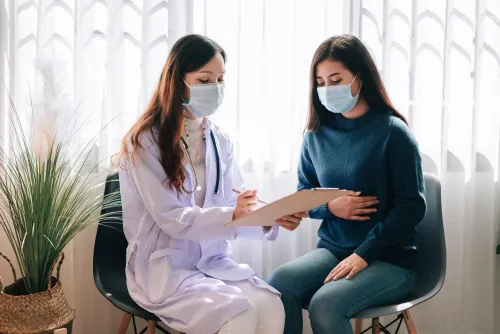
2. Before leaving, ask for a written plan naming the exact drug and dose, next appointment, permitted medicines, oncology team’s phone number and nearest emergency facility. Confirm whom to call after hours. This targeted therapy recovery support plan prevents guessing when symptoms appear.
3. Flushing, wheezing, dizziness, facial or throat swelling and a sudden rash can signal an early reaction, not ordinary tiredness. Contact the treatment centre immediately; use emergency care for breathing difficulty, fainting or rapidly worsening symptoms rather than waiting for the next visit. Expected tiredness can follow treatment, but worsening symptoms need advice.
4. Oral targeted therapy has no clinic observation period. Before you take a dose at home, you or your caregiver must know who to call afterward and what symptoms require urgent help.
How do oral and intravenous targeted therapies change your routine?
Oral targeted therapy changes your home routine, but it does not remove oncology supervision. Keep a written schedule and follow these steps for targeted therapy aftercare in Pune:
1. Take each tablet or capsule at the prescribed time, with food or on an empty stomach exactly as the label states. Food can alter absorption.
2. If you miss a dose, follow the drug-specific instruction or call the oncology team. Do not double-dose unless they explicitly instruct you.
3. Do not crush, split or open a tablet or capsule unless the label or pharmacist confirms it is safe. Keep it in the original labelled container, away from children, pets, heat and moisture.
4. Give the oncologist or oncology pharmacist a complete medication list before starting and whenever it changes. Include prescription medicines, antacids, blood thinners, seizure medicines, grapefruit, supplements and herbal products; interactions depend on the specific targeted drug.
5. Intravenous treatment requires attendance at every appointment and observation for a reaction before you leave. Oral treatment still needs active supervision, adherence checks and planned blood tests.
6. Ask how the drug affects pregnancy, contraception and fertility before treatment begins. Some medicines can harm a developing fetus, and contraception precautions can continue for a drug-specific period after the last dose; do not assume a standard chemotherapy rule applies.
Which symptoms are expected, and which need urgent help?
Symptoms can begin during treatment, after a dose, or later. Fatigue, appetite changes, nausea, diarrhoea and skin changes are common possibilities, but the drug determines their timing, duration and severity; recovery has no fixed schedule.
| Time after treatment | What you may notice | What to do |
|---|---|---|
| During treatment or soon after a dose | Tiredness, nausea, appetite change, diarrhoea or skin changes | Follow the written plan and report worsening symptoms |
| Over the next several days | Symptoms may settle, persist or intensify | Contact the oncology team if eating, drinking or daily activity becomes difficult |
| During ongoing treatment | New effects can appear after a later dose | Do not assume an earlier mild reaction will remain mild |
For targeted therapy recovery support, record your temperature, bowel movements, food and fluid intake, weight, blood pressure or blood sugar when your plan requires it. For targeted therapy patient care in Pune, keep these records and your drug schedule ready for calls or appointments.
Seek same-day oncology advice for a new or worsening rash, persistent diarrhoea, repeated vomiting, mouth soreness, reduced urination, inability to eat or drink, rapidly increasing fatigue, or fever at the threshold supplied by your oncology team.
Go to emergency care for severe breathlessness, chest pain, fainting, confusion, sudden weakness, uncontrolled bleeding, severe dehydration, facial swelling or difficulty breathing. Do not stop, restart or double a targeted drug unless your oncology team instructs you; a planned hold or dose reduction depends on the drug and toxicity.
What happens at targeted-therapy follow-up visits in Pune?
Follow-up is set by the cancer, molecular target, drug, treatment intent, symptoms and toxicity—not by a generic monthly schedule. A visit may include symptom and adherence review, physical examination, complete blood count, liver and kidney tests, electrolytes, urine protein and blood-pressure measurement.
The drug’s known risks determine extra monitoring. Your team may order an ECG, echocardiogram, eye examination, lung assessment, CT, MRI or another scan. Targeted therapy patient care in Pune therefore needs a drug-specific plan, not a general wellness check.
| Finding | Possible change | Example |
|---|---|---|
| Symptoms or laboratory toxicity | Hold, reduce or delay the dose | Low counts, liver injury or severe diarrhoea |
| Controlled toxicity | Add supportive medicine | Treatment for nausea, rash or blood pressure |
| Stable results | Continue treatment | No dose-limiting toxicity |
| Scan response or progression | Continue treatment or change scan timing | An early response does not automatically permit stopping |
Ask for a written calendar showing tests, doses, planned holds and the next scan. Keep copies of reports from every facility and confirm how outside results will be reviewed. Patients arranging targeted therapy follow up in Pune can also request an emergency contact plan.
Dr. Pratik Patil - Best Oncologist in Pune can help coordinate oncology review when reports, toxicity decisions and scan timing need to be assessed together.
Related service
Targeted Therapy What is targeted therapy? Targeted therapy is a type of cancer treatment that targets proteins that influence how cancer cells grow, divide, and... View service → |
What should your longer-term recovery plan include?
Your longer-term recovery plan should state whether treatment has ended or continues. Surveillance means scheduled follow-up after stopping therapy; monitoring means checking symptoms, tests and scans while the drug still controls the cancer. Continuing treatment can last until planned completion, unacceptable toxicity or cancer progression.
| Plan | What it means | What to confirm |
|---|---|---|
| Surveillance | Therapy has stopped | Scan dates, late-effect reviews and recurrence symptoms |
| Monitoring | Therapy continues | Dose, laboratory tests, scan timing and treatment-hold rules |
Keep a recovery folder containing the exact drug name and schedule, molecular and pathology reports, laboratory and scan dates, missed-dose instructions, permitted over-the-counter medicines, contact numbers, the nearest emergency facility and copies of outside reports. Confirm that the oncology team can review reports from other Pune facilities.
A clear scan does not prove every recovery need is complete. Follow-up can address late effects, other illnesses, emotional distress, nutrition, physical activity, sexual health, fertility, contraception and vaccinations.
If the cancer grows, the original molecular result may not describe resistant disease. The oncologist may discuss a new biopsy or a validated blood-based molecular test before choosing another treatment.
Whether you need targeted therapy for recovery care in Pune or targeted therapy aftercare in Pune, confirm the plan before travelling, changing facilities or stopping treatment.
Frequently asked questions
What happens after an intravenous targeted-therapy dose?
Stay for the observation period set by your oncology team. Staff check for an infusion or allergic reaction and discharge you after confirming that you are stable.
How can oral targeted therapy change your daily routine?
Take each dose at the prescribed time and follow instructions about food, missed doses, storage, and interactions. Keep a written record of doses and symptoms.
Which symptoms after targeted therapy need urgent help?
Seek urgent medical help for breathing trouble, facial or throat swelling, severe rash, confusion, fainting, or symptoms that your oncology team has identified as emergencies.
What happens at targeted-therapy follow-up visits in Pune?
Your oncology team reviews symptoms, medicines, treatment adherence, examination findings, and test or scan results before deciding whether to continue, adjust, or investigate treatment.
What should a longer-term targeted-therapy recovery plan include?
Plan regular follow-up appointments, monitoring tests, medicine reviews, symptom tracking, nutrition and activity guidance, infection precautions, and clear instructions for contacting your care team.