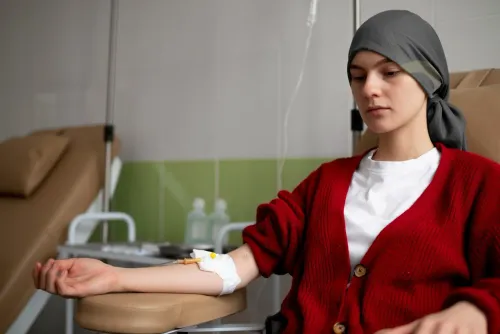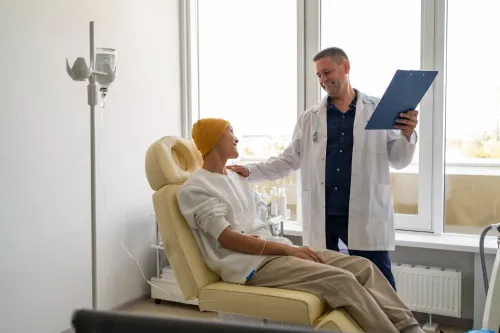


Starting immunotherapy involves more than arriving for an infusion: your cancer diagnosis, stage, biomarker results, previous treatments, medicines, and organ health all shape the plan. By the end, you will know what happens before treatment, what an infusion-day visit involves, how side effects are monitored, and which practical questions to ask at a Pune cancer centre.
Key takeaways
- Bring biopsy, pathology, biomarker and imaging reports to your first consultation.
- Ask which immunotherapy medicine and biomarker test match your cancer.
- Expect pre-infusion checks, medicine administration and observation on infusion day.
- Report new symptoms early because immune-related side effects need prompt assessment.
What happens before immunotherapy starts in Pune?
The oncology team first confirms the cancer type, stage and treatment goal before deciding whether immunotherapy is appropriate. It reviews the biopsy findings, pathology report, biomarker results and CT, MRI, PET-CT or other imaging. Previous chemotherapy, radiotherapy, surgery and targeted treatment are also examined because they affect benefit, safety and treatment order.
This is the initial decision stage in what happens during immunotherapy for treatment in Pune.
Tell the oncologist about:
- Every prescription medicine, over-the-counter medicine and supplement
- Drug allergies and previous immunotherapy reactions
- Autoimmune disease, organ transplantation, chronic lung disease, liver disease or current infection
- Previous cancer treatments and significant hospital admissions
- Vaccination history, including recent vaccines
The team may check a complete blood count, kidney function, liver function, thyroid tests and blood glucose before treatment. Abnormal results do not automatically rule out immunotherapy, but they can require treatment of the problem, closer monitoring or a different plan.
Approved indication | Clinical trial Treatment use | The drug is authorised for a defined cancer, stage or biomarker situation | The treatment is being studied under a research protocol Decision basis | Established evidence, eligibility and informed consent | Trial criteria, consent and protocol assessments What to confirm | Expected benefit, risks and alternatives | Study purpose, extra visits, testing, costs and withdrawal rules
A trial is not simply a stronger treatment; ask which category applies before consenting.
Which immunotherapy medicine and biomarker test will you receive?
The medicine depends on your cancer type, stage, previous treatment and test results. Pembrolizumab, nivolumab, atezolizumab, durvalumab and ipilimumab are immune checkpoint inhibitors used in different cancers; some are given alone, while others are combined with chemotherapy, radiotherapy, targeted therapy or surgery.
| Treatment category | What it means | Examples or use |
|---|---|---|
| Immune checkpoint inhibitors | Release immune brakes so T cells can attack cancer | Pembrolizumab, nivolumab, atezolizumab, durvalumab, ipilimumab |
| Other monoclonal antibodies | Attach to a cancer target or immune-related target; checkpoint inhibitors are also monoclonal antibodies | Drug choice depends on the tumour target |
| Cellular therapies | Use modified or selected immune cells against cancer | CAR T-cell therapy, tumour-infiltrating lymphocytes |
| Cancer vaccines and immune stimulants | Train or activate immunity against tumour features | Cancer-specific vaccines, cytokine-based treatments |
Your oncologist may request PD-L1 expression, mismatch-repair deficiency, or microsatellite instability-high status. Tumour mutational burden and cancer-specific genomic testing, such as tests for EGFR, ALK or other alterations, can guide immunotherapy, targeted therapy or combinations.
A positive biomarker supports selection; it does not guarantee tumour shrinkage, longer survival or freedom from side effects. For immunotherapy cancer treatment in Pune, ask which test supports the proposed drug, whether the use is approved for your cancer or part of a clinical trial, and why a combination or single-agent plan fits your case.
What happens on an immunotherapy infusion day?
An outpatient or day-care visit usually begins with registration, prescription confirmation, and a review of your symptoms, temperature, pulse, oxygen level and blood pressure. The team checks blood-test results, and the oncologist approves treatment only when the results and clinical assessment support proceeding.
- A nurse inserts a cannula or accesses your implanted port. Premedication is given when prescribed.
- Pharmacy staff dilute the prescribed medicine in a sterile infusion bag according to the treatment order.
- A nurse administers it through an intravenous line while monitoring you. Some immunotherapy medicines use an injection or tablet instead.
- After administration, you remain under observation before discharge, especially if you have reacted to a previous dose.
Medicine-infusion time and total visit time are different.
| Medicine-infusion time | Total visit time |
|---|---|
| Actual period the drug enters your vein | Registration, blood tests, consultation, preparation, infusion, observation and discharge |
| Varies by medicine, dose and previous reactions | Can extend beyond infusion time because of waiting and clinical review |
Report fever, chills, flushing, rash, wheezing, dizziness or a blood-pressure change immediately. Staff can slow or stop the infusion and provide treatment; silently tolerating symptoms increases risk.
The immunotherapy process in Pune follows the regimen rather than one universal calendar. Visits might occur every few weeks or on another schedule, and spacing can change after blood results, treatment response or toxicity. Ask for the planned cycle dates and the circumstances that could delay the next dose.
How are side effects, response and treatment length monitored?
After leaving the infusion unit, what to expect from immunotherapy is continuing assessment rather than treatment on its own. At follow-up visits, the oncology team reviews symptoms, blood counts, kidney and liver tests, thyroid tests and glucose measurements, then examines organs linked to your risks and medical history.
An immune-related adverse event occurs when activated immunity inflames healthy tissue. It can affect the skin, bowel, liver, lungs, thyroid or other endocrine glands, kidneys, heart, nerves and joints. Contact the oncology team promptly for:
- Diarrhoea, abdominal pain, jaundice or a severe rash
- A new cough, breathlessness, persistent headache, confusion or marked weakness
- Reduced urine, or major changes in thirst or urination
Chest pain, severe breathing difficulty, collapse or confusion requires emergency care; do not wait for the next clinic appointment.
Significant toxicity can require pausing immunotherapy and prescribing corticosteroids. Severe or steroid-resistant inflammation may need additional immunosuppression and specialist care. Never self-start steroids or stop them abruptly; the dose and taper depend on the affected organ and severity.
CT, MRI, PET-CT or another planned scan helps assess response. Tumours can appear larger from immune-cell swelling, called pseudoprogression, so the team interprets scans alongside symptoms and repeat imaging. Treatment may continue until disease progression, unacceptable toxicity or a protocol-defined limit; some regimens use a fixed duration even during response.
What should you take to a Pune immunotherapy appointment?
Bring one folder, plus a phone copy, to your appointment for immunotherapy cancer treatment in Pune. Include:
- Prescription and written treatment plan
- Biopsy report and complete pathology report
- Scan discs and reports for CT, MRI or PET-CT
- Recent blood-test results
- Every medicine, vitamin and supplement, with doses
- Allergy details, autoimmune disease, organ transplant history, chronic lung or liver disease, infections and previous immunotherapy reactions
- Vaccination record
- Emergency contact information
- Notes on work leave, travel, transport and caregiving
Ask these questions before treatment begins:
| Question | Why it matters |
|---|---|
| Which drug is planned, and which biomarker supports it? | Confirms the medicine and the evidence behind its selection |
| Is this use approved for my cancer, or is it part of a clinical trial? | Clarifies consent, eligibility and trial-related visits |
| How often are blood tests and scans required? | Helps you plan appointments and monitoring |
| How long will each visit usually take? | Separates infusion time from the full day-care visit |
| Which symptoms require an immediate call? | Sets a clear safety threshold |
| Who answers after hours, and where will urgent immune-related toxicity be assessed? | Prevents delays during a serious reaction |
Monitoring and emergency arrangements differ between facilities even when the medicine is identical, so discuss them with your Pune oncologist or centre, including Dr. Pratik Patil - Best Oncologist in Pune.
Related service
Immunotherapy Immunotherapy What is immunotherapy? Immunotherapy is a type of treatment developed to boost the body’s immune system to help oppose certain types of diseases. |
Frequently asked questions
What happens before immunotherapy starts in Pune?
The oncology team confirms your cancer type, stage and treatment goal, then reviews biopsy, pathology, biomarker, imaging and previous treatment records.
Which immunotherapy medicine and biomarker test will you receive?
The medicine and biomarker test depend on your cancer type, stage, treatment history and tumour findings. Ask your oncologist which result supports the recommended treatment.
What happens on an immunotherapy infusion day?
The team checks your health and treatment plan, administers the prescribed medicine through an intravenous line, and observes you for immediate reactions.
How are side effects, response and treatment length monitored?
Your team reviews symptoms, examination findings, blood tests and follow-up imaging to assess safety and response before continuing or changing treatment.
What should you take to a Pune immunotherapy appointment?
Take your reports, scan images, medicine list, allergy details, previous treatment records and written questions. Include a caregiver if you need support.